
Shandur Polo Festival 2026: Dates, Travel & Tips

Skardugo Editorial
June 9, 2026
The World's Highest Polo Ground, and What It Actually Takes to Get There
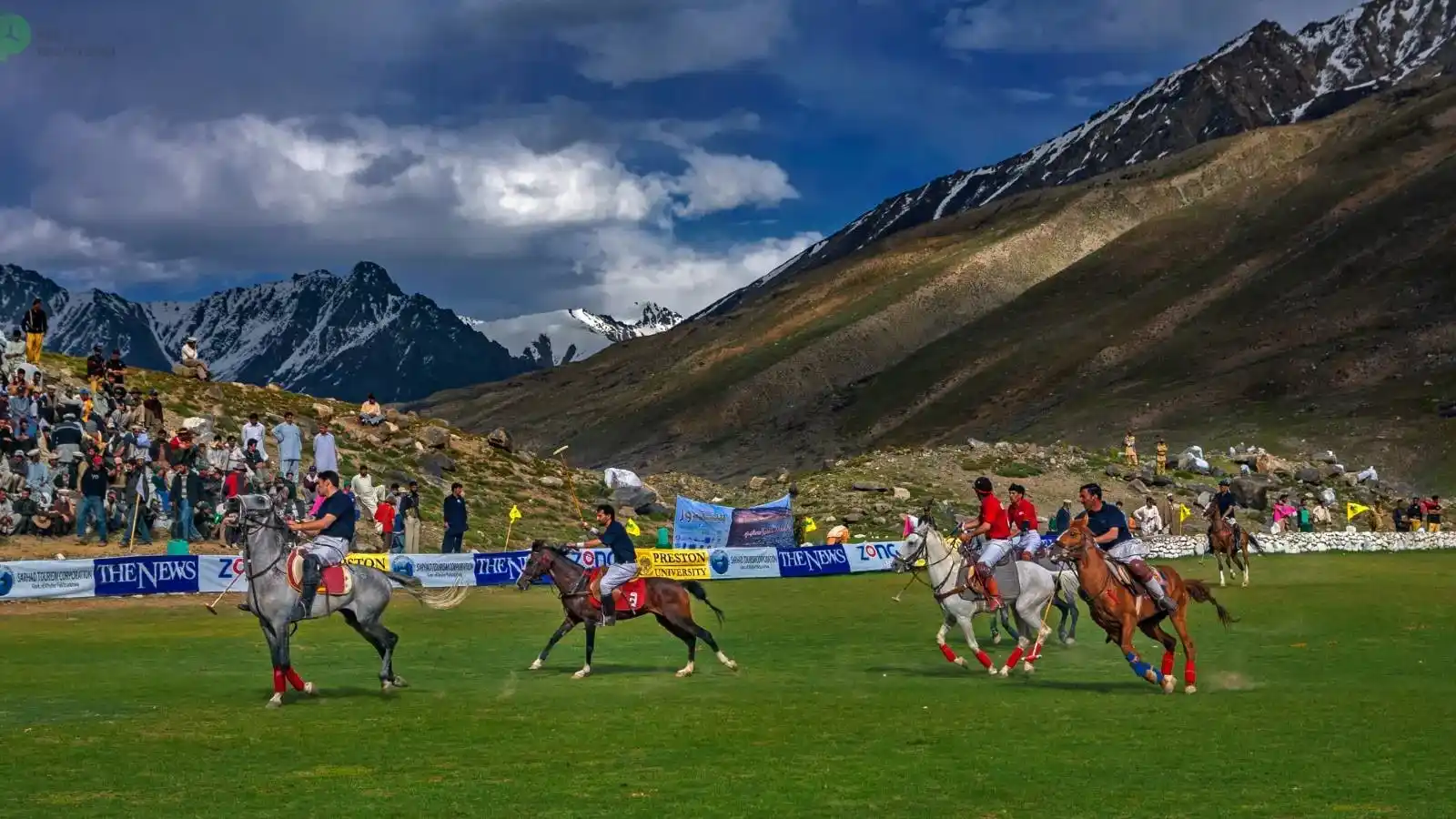
At 3,700 metres above sea level, the Shandur Pass hosts one of the most unusual sports events on earth. The Gilgit and Chitral teams ride against each other every summer on a rough natural ground — no helmets, no strict rules, no stadium seating. The crowd spreads up the hillside on both sides of the field like a natural amphitheatre, and the whole plateau transforms into a temporary village of tents, dhol drums, and bonfires for three days straight.
This is not a polished festival. The road is brutal, the altitude bites, and nights get cold enough to make you regret not packing warmer layers. But if you want raw, unscripted spectacle in one of Pakistan's most scenic mountain corridors, it is worth the effort.
2026 Festival Dates
The 2026 edition has two sets of confirmed dates to be aware of. The KP government officially announced dates of June 11–13, with the KP Tourism Department handling organisation. Multiple tour operators, including Apricot Tours, are running departures around July 8–10, which aligns with the traditional Wikipedia-cited dates of 7–9 July when the Gilgit vs Chitral final is held. The discrepancy likely reflects preliminary/regional matches in June and the main championship round in early July.
The practical advice: watch official announcements from the KP Tourism Department and Gilgit-Baltistan government in May–June, as dates can shift due to Islamic calendar observances. Confirm before booking transport.
What Actually Happens at the Festival
The format is straightforward. Preliminary matches between A, B, C, and D teams of Chitral and Gilgit are played on the first two days, with each team fielding six players plus 2–4 reserves. Each match runs one hour in two halves. The final — the showpiece everyone comes for — is held on the last day, traditionally starting around 9:00 am. A senior government official (sometimes the Prime Minister or President) throws the ball to begin the final.
The polo field itself measures roughly 200 metres by 56 metres — considerably smaller than a regulation polo pitch — with 60-centimetre stone walls running along the length instead of boards. That narrow ground, combined with riders who use their sticks as weapons and feel no obligation to avoid contact, makes for something closer to a cavalry skirmish than sport. Between halves, local Khowar and Wakhi musicians perform, people join in traditional dances, and the crowd — about 90% local families, soldiers, and regional visitors — gets genuinely loud.
After dark: bonfires, more folk music, and the kind of late-night conversations that happen when you're camped at altitude with no phone signal. If you came for comfort, you're in the wrong place. If you came for atmosphere, you'll be fine.
Getting to Shandur Pass: The Honest Road Report
There are two approach routes, and neither is easy.
From Gilgit (approximately 200–225 km)
The Gilgit–Ghizer road is paved and broad as far as Phander. After Phander, the road becomes rocky and unpaved as it climbs toward the pass. Fill your fuel tank in Gilgit — there is no reliable fuel between Phander and Booni on the Chitral side. Allow a full day from Gilgit. The road through Phander and Gupis-Yasin Valleys is genuinely scenic, with Khalti and Phander Lakes alongside the road. That section alone justifies the drive.
Vehicle requirement: 4WD/jeep strongly recommended from Phander onward. NATCO buses do run this route daily in summer, but you lose the flexibility to stop.
From Chitral (approximately 147–155 km)
Chitral to Mastuj is around 120 km and takes 6–7 hours on a road that becomes a dirt track at Booni. From Mastuj to Shandur is another 40–45 km of rocky, ascending track — allow another 4 hours. The stretch from Mastuj to Shandur requires a 4WD and nerves; it cannot be done in a standard sedan. Carry food and water from Chitral — there is almost nothing available between Mastuj and the GB border.
The Ghizer–Shandur–Chitral road is open in summer and closed in winter. It should be fully accessible by June.
Foreign visitors: Expect security checkpoints every 10 km or so. Carry multiple photocopies of your passport and visa pages to hand over at each checkpoint. Getting clearance at the pass itself can add up to an hour.
The Faster Option: Fly to Chitral
PIA operates flights from Islamabad to Chitral (roughly 1 hour). This cuts out the Islamabad–Chitral road section entirely and puts you within one day's jeep ride of Shandur. Flights to Chitral can be cancelled in bad weather, so build a buffer day into your itinerary.
For travellers who want to combine Shandur with Gilgit-Baltistan, the classic route runs Islamabad → Chitral (fly) → Mastuj → Shandur → Phander Valley → Gilgit, then either fly back to Islamabad or connect onward to Hunza or Skardu. This one-way crossing is among the most dramatic drives in Pakistan. Consider pairing it with the 10-Day Skardu & Hunza Tour if you want to extend the trip east after reaching Gilgit.
Accommodation: There Are No Hotels at Shandur
Let that sink in. Once you're on the plateau, the only option is camping. Tour operators run organised camp setups with 2-person tents, mess tents, and toilet tents. If you're going independently, bring your own tent and sleeping gear rated to at least -5°C — nights drop sharply to 5–10°C even in July, and the wind on an exposed plateau at 3,700 metres feels colder than the thermometer suggests.
For the nights before and after the festival, Mastuj has basic guesthouses on the Chitral side, and the PTDC Khalti motel is a standard stop on the Gilgit side. Guesthouses in both Chitral town and Gilgit city range from around PKR 3,000–8,000 per night for a twin room.
Prices at Shandur itself during the festival — for food stalls and any paid camping — increase noticeably. Budget a buffer.
What to Pack
Temperature swings are the main surprise. Daytime highs sit around 15–20°C, and the UV at altitude is intense — sunburn at Shandur is faster than at sea level. But once the sun drops, temperature falls rapidly. A thermal base layer, a fleece, and a windproof jacket are essential even in July. Also:
- Sunscreen (SPF 50 minimum) and a hat with a brim
- Enough cash in PKR for 3+ days — there are no ATMs on the plateau
- Snacks and water from Chitral or Gilgit
- A basic first-aid kit, including altitude sickness medication if you're susceptible
- Headlamp for navigating the campsite after dark
Altitude: Don't Dismiss It
Shandur Pass sits at around 3,700 metres. Most visitors coming directly from Islamabad (500 m) or Chitral (1,500 m) will feel the thin air. Expect reduced energy, possible headaches on day one, and slower digestion. Ascend slowly, drink water constantly, and avoid alcohol the first night. Most people acclimatise within 24 hours, but go easier than you think you need to.
Combining Shandur with a Gilgit-Baltistan Trip
Shandur works well as a cultural anchor within a wider northern Pakistan itinerary. From Gilgit, you're within striking distance of Hunza, Naltar, and Phander Valley. If you're planning more time in the region, the 8-Day Skardu Valley Tour pairs well — fly Islamabad–Chitral, drive to Shandur for the festival, continue to Gilgit, then fly or drive to Skardu. That circuit covers three distinct landscapes and two distinct cultures without retracing your route. Alternatively, serious trekkers often follow Shandur with the 14-Day K2 Base Camp Trek if their timing aligns and their legs are ready.
If Skardu's own high-altitude landscape interests you, Deosai National Park is the equivalent experience on the GB side — a vast plateau above 4,000 metres, open from mid-June, with brown bears and wildflowers rather than polo.
Quick Planning Facts
- 2026 dates: June 11–13 (KP government announcement) and July 8–10 (main matches / tour operator departures)
- Location: Shandur Pass, on the KP–GB boundary, Ghizer District
- Elevation: ~3,700 m (12,200 ft)
- Distance from Gilgit: ~200 km (allow 8–10 hours by jeep)
- Distance from Chitral: ~147–155 km (allow 10–12 hours by jeep)
- Vehicle: 4WD required from Phander (Gilgit side) or Booni (Chitral side) onward
- Accommodation at Shandur: Camping only — no guesthouses or hotels on the plateau
- Entry fee: Typically PKR 1,000–2,000 per person (confirm on arrival — fees can change)
- Best approach for first-timers: Fly Islamabad–Chitral, jeep to Shandur, exit via Gilgit
- Road season: Late April to early November; closed in winter
- Organised packages: Available from Islamabad for 8–14 days, prices vary widely — contact us for current Skardu Trips pricing
Ready for Your Adventure?
Let us handle the planning. Our expert-led tours offer an unforgettable experience of Skardu's wonders.
View Our Tour Packages